2025
Procura+
Awards
2025 PROCURA+ AWARDS
In the latest edition of the Procura+ Awards, public authorities could submit an application in three different categories:
- Sustainable Procurement of the Year: This category will reward both procurements and initiatives which integrate and combine any of the environmental, economic, circular and social aspects of sustainability. It will aim to highlight public authorities which promote a holistic approach to implementing public procurement. .
- Innovation Procurement of the Year: This category will reward both procurements and initiatives which use innovative approaches in their purchasing practices, as well as public authorities that serve as a launching customer, fostering innovation by purchasing cutting-edge products, services and works to drive sustainable development and foster innovation.
- Global Initiative of the Year: For the first time this year the Procura+ Awards will go beyond Europe. The Global Initative of the Year seeks to showcase good practices globally. It will focus on global outstanding public procurement initiatives, such as programmes, policies, actions, guidance and tools that contribute towards strategic, sustainable, circular and innovation procurement.
The applications were assessed by a jury of experienced public procurement experts and policy makers:
- Katrin Stjernfeldt Jammeh, Mayor of Malmö and Chair of the Procura+ Network
- Mark Hidson, Global Director, ICLEI’s Sustainable Procurement Capacity Center
- Erika Bozzay, Acting Deputy Head at the Infrastructure and Public Procurement Division, OECD
- Jorge Laguna Celis, Director of UNEP's One Planet Network
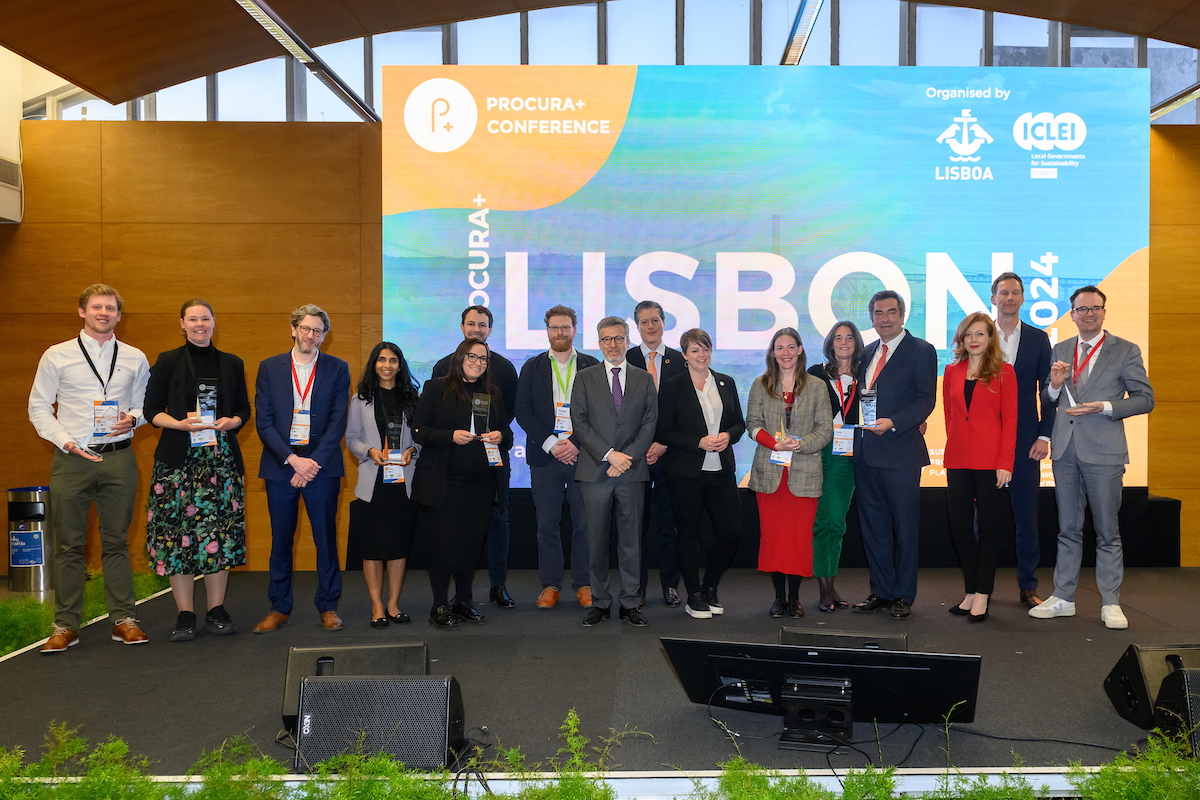
2024 WINNERS & FINALISTS
Winner: BERLINER VERKEHSBETRIEBE (BVG), Germany
Charging infrastructure within the city area
The Berliner Verkehrsbetriebe (BVG) implemented a groundbreaking sustainable procurement focused on installing up to 101 electric bus charging points at 36 locations across Berlin. They integrated Human Rights and Environmental Due Diligence (HREDD) into their public procurement, aligning with UN and OECD guidelines. BVG pioneered a dialogue-based tender process emphasizing shared responsibility, transparency, and collaboration with suppliers. Key objectives included promoting decent work, fair wages, and reducing environmental risks throughout the supply chain. Suppliers were actively involved in the development of sustainable solutions, through bidder colloquia, clarification and negotiation sessions to foster mutual understanding. Sustainability was a core evaluation criterion, and final concepts became binding contract elements. The process significantly improved the quality of submissions and supplier awareness. It also fostered sector-wide cooperation, notably with Hamburg and Düsseldorf, to develop a harmonised evaluation approach. Key outcomes included improved risk identification, stronger supplier commitments, and a replicable model for sustainable procurement. Lessons learned highlight the effectiveness of concept evaluations for complex, high-risk tenders and the importance of long-term supplier engagement. BVG’s approach transformed procurement from a compliance task into a tool for systemic change in public transport sustainability.
Runner-up: Bretagne porte de Loire Communauté, France
Supply, delivery, assembly and installation of second-hand furniture, material, equipment for the ‘Maison de services Jeunesse & Numérique’ building in Bain-de-Bretagne
Bretagne Porte de Loire Communauté decided to furnish its new ‘Maison de services Jeunesse & Numérique’ entirely with second-life furniture. For this project, the public authority decided to prioritize re-use, reconditioning, and upcycling, excluding new and recycled items. A detailed internal inventory of unused furniture was conducted, matching available items with functional needs. For the missing furniture, a tender was issued after a market engagement that engaged second-hand furniture professionals. Environmental and circular criteria were embedded from the start, promoting inclusion programmes for social and solidarity economy stakeholders, leading to bids across all 10 lots, with seven different suppliers selected. The procurement aimed to support the circular economy, reduce resource consumption, and comply with France’s AGEC law, which mandates reuse in public purchases. The project resulted in significant environmental benefits by minimizing waste and carbon emissions, and social impact through inclusion of social enterprises. Internally, it fostered a cultural shift, with staff and elected officials embracing second-life furniture and extending reuse practices to other projects. The project also gave the building a unique character appreciated by the public. The experience demonstrates the feasibility and value of circular procurement for other local authorities
Third place: Muncipality of Oeiras, Portugal
Acquisition of maintenance services for municipal green spaces
The Oeiras City Council has implemented a forward-thinking public procurement model for the maintenance of its green spaces, combining strict environmental standards with advanced technology. With a contract value of nearly €20 million, the initiative aims to reduce environmental impact, conserve natural resources and promote sustainability in urban management. This project also aims to improve operational efficiency and encourage suppliers to innovate and invest in environmentally friendly practices.
Key innovations include the use of electric vehicles and tools, which reduce CO₂ emissions and noise pollution, and the implementation of smart irrigation systems that reduce water consumption by 50% across 67.5 hectares, with plans to expand this to 80 hectares by the end of 2025.
All green waste is redirected to a composting plant, promoting circular economy practices and minimising waste going to landfill. Mandatory staff training was also provided, equipping teams with the skills needed to operate the new systems efficiently.
Winner: Orléans Métropole, France
Heat capture from wastewater to heat a university district and residential buildings
Orléans Métropole launched a pioneering sustainable energy project that captures heat from urban wastewater to supply clean energy to residential and university buildings. This initiative complies with EU Directives on energy neutrality in wastewater treatment and significantly reduces local greenhouse gas emissions.
At the core of the system is an innovative combination of a heat exchanger, a high-efficiency heat pump and a pumping unit that extracts heat from the wastewater. A 5 km heating network with 16 substations distributes the recovered energy across the south of Orleans, including integration with the existing district heating network to cover peak demand.
The contract was structured as a public service delegation, a strategic contractual model that transferred the €5.2 million investment risk to the operator, Dalkia (EDF Group), which recovers the costs through the sale of heat. Instead of launching a new tender, Orléans Métropole negotiated an amendment to its existing contract with Dalkia, in accordance with public procurement rules. The project also received €1.9 million in funding from the French agency ADEME, which supports clean heat production.
Launched in 2024, the system now supplies 4,100 MWh of clean heat per year and avoids the emission of 976 tonnes of CO₂. This approach demonstrates how innovative procurement models can deliver replicable, high-impact climate solutions without placing an additional burden on public finances.
Runner-up: Oslo Municipality, Norway
Oslo Furniture Reuse Platform
The City of Oslo has launched the ‘Oslo Furniture Reuse Platform - Loopfront’, a pioneering digital solution that integrates circular economy practices into public procurement. Procured through an ICT public tender for approximately €210,000, the Loopfront platform was selected based on functional specifications to minimise customisation, reduce costs and enable rapid implementation.
This cloud-based marketplace allows the 47 municipal departments to independently catalogue, share, repair and reuse furniture, eliminating the need for central warehouses. The platform is integrated into existing framework agreements for logistics and repair, forming a fully coordinated and scalable reuse system.
Since its launch, in January 2025, the platform has enabled the reuse of 1,037 pieces of furniture and catalogued 20,000 more for future use. Verified data shows savings of €8,800 and 34 tonnes of CO₂ to date, although adjusted estimates suggest savings of €235,000 and 65 tonnes of CO₂. Importantly, the solution supports 12 local SMEs and has created new apprenticeship positions in carpentry and upholstery.
A requirement to prioritise reuse in procurement processes is established, demonstrating how ICT procurement can drive innovation, reduce emissions and waste, and foster a sustainability culture in the public sector.
Third place: ANCI Toscana, Italy
CLIMABOROUGH Innovation Partnership
ANCI Toscana’s CLIMABOROUGH Innovation Partnership is a pioneering public procurement initiative, with a budget of €2.4 million, which supports climate resilience in eight European cities through socio-technical solutions tailored to each locality in the fields of energy, mobility and waste. Funded by the Horizon Europe programme, it applies the innovation partnership model (Directive 2014/24/EU), which uniquely enables joint research and development and implementation under a single contract. The procurement followed a rigorous five-stage structure: open accreditation, bilateral technical negotiations, financial offers, selection of successful bidders and a 12-month deployment phase. From the 64 initial candidates, the process shortlisted 15 winning economic operators (two per city, except Maribor), six of which were selected outside their countries of origin, reinforcing cross-border innovation transfer. Joint design workshops and market consultations ensured that the solutions responded to real urban needs, while encouraging the participation of SMEs and start-ups.The partnership centralises procurement through ANCI Toscana, respecting the autonomy of each city through individual project lots. Each pilot project is currently being implemented in cities such as Athens, Sofia, Turin and Grenoble. The cities reserve the right to purchase additional versions of the solution under previously agreed conditions.
Impacts include fostering market access for emerging green innovators, promoting the replication of climate solutions, and creating a scalable public procurement model for sustainable urban transformation across Europe. It directly accelerates progress towards the EU's climate neutrality goals.
Winner: UNDP Uzbekistan
The Path to Water Through Life. No one left behind.
UNDP Uzbekistan’s initiative, “The Path to Water Through Life, No One Left Behind,” aimed to provide sustainable access to clean water in remote communities of Karakalpakstan, Uzbekistan, a region severely impacted by environmental degradation. With a budget of €320,000, the project modernized and rehabilitated water infrastructure using solar-powered pumping systems and energy-efficient technologies, improving water access for over 3,000 people. The procurement process followed UNDP’s transparent, competitive standards, using the “Quantum” digital platform. A detailed design phase ensured local relevance and collaboration, and technical feasibility. The results were transformative: villages such as Bozataw and Qipchoq now have reliable, climate-resilient water systems. The project significantly reduced fossil fuel dependency and operational costs while improving public health and easing the burden, especially on women and children, of fetching water, while promoting capacity building and involvement of the local communities. It also contributed to multiple Sustainable Development Goals, including clean water (SDG 6), health (SDG 3), and climate action (SDG 13). Key lessons included the importance of local collaboration, strong technical planning, and rigorous tendering. The project exemplifies how sustainable procurement can address urgent development challenges and foster inclusive, long-term community resilience.
Runner-up: Auckland Council and Ministry of Social Development, New Zealand
Ngā Puna Pūkenga programme – Skills for Industry
Auckland Council’s Ngā Puna Pūkenga (NPP) – Skills for Industry programme is a collaborative initiative launched in 2019 with New Zealand’s Ministry of Social Development to address both labour shortages in infrastructure and social inequities in employment. With a contract value of €8.7 million, the program connects individuals facing barriers to work — including Māori, Pasifika, youth, and people with disabilities — to permanent, living-wage jobs in the water and infrastructure sectors. Over 1,200 people have secured sustainable employment through NPP, with an 80% retention rate and 70% remaining off government benefits. The Council embedded NPP participation into its procurement evaluation criteria, driving supplier engagement. 157 employers have participated, with several maintaining long-term commitments. The program’s design includes recruitment, onboarding support, mentoring, and access to training. A government-commissioned study found that NPP generates NZD $7.3 million in social value per year, with a return of $3.10 for every $1 invested. NPP is now influencing procurement policy nationwide and demonstrates how targeted procurement can deliver lasting economic and social value. Key lessons include the importance of face-to-face job matching, strong employer alignment, and collaboration between local and central government for scalable, community-driven outcomes.
Third place: Ministry of Management and Innovation in Public Services, Brazil
Procure+Brazil (Contrata+Brasil)
Contrata+Brasil (Procure+Brazil) is a digital public marketplace launched in February 2025 by Brazil's Ministry of Management and Innovation in Public Services. It aims to make public procurement more inclusive and sustainable by simplifying access for micro-entrepreneurs, especially those from vulnerable backgrounds.
The platform centralises procurement at all levels of public administration, eliminates excess documentation and integrates with federal databases to enable fast, paperless transactions.
Initially focused on repair services, it has already facilitated contracts worth more than €63,000, 97% of which went to suppliers that were previously excluded from public procurement.
In a country where only 0.4% of micro-entrepreneurs were part of the federal supplier base, this initiative empowers local small businesses, strengthens local economies, reduces inequalities and shortens supply chains, contributing to potential environmental benefits.
Beyond simply digitising bureaucracy, Procure+Brazil redefines public procurement as a strategic tool for inclusive development. By streamlining workflows and fostering collaboration, it turns public spending into an engine of opportunity, resilience and sustainable gov
.